Classical Conditioning: Definition, Examples, Principles, and Real-Life Applications
Classical conditioning को आसान भाषा में समझें — Pavlov का experiment, key terms, real-life examples, और applications।
क्या आपने कभी phone notification सुनी है और बिना message check किए phone पहुँचा लिया है? या hospital में जाते समय nervous feel किया है क्योंकि smell, lights, या sounds ने पुरानी medical experience याद दिला दी?
यही classical conditioning का basic idea है — हम दो चीज़ों को जोड़कर सीखते हैं।
Classical conditioning psychology में सबसे important concepts में से एक है क्योंकि यह explain करती है कि लोग और animals association के through emotional और physical responses कैसे सीखते हैं। यह fear, food aversions, advertising effects, classroom routines, medical anxiety, और कुछ therapy techniques को explain करने में मदद करती है।
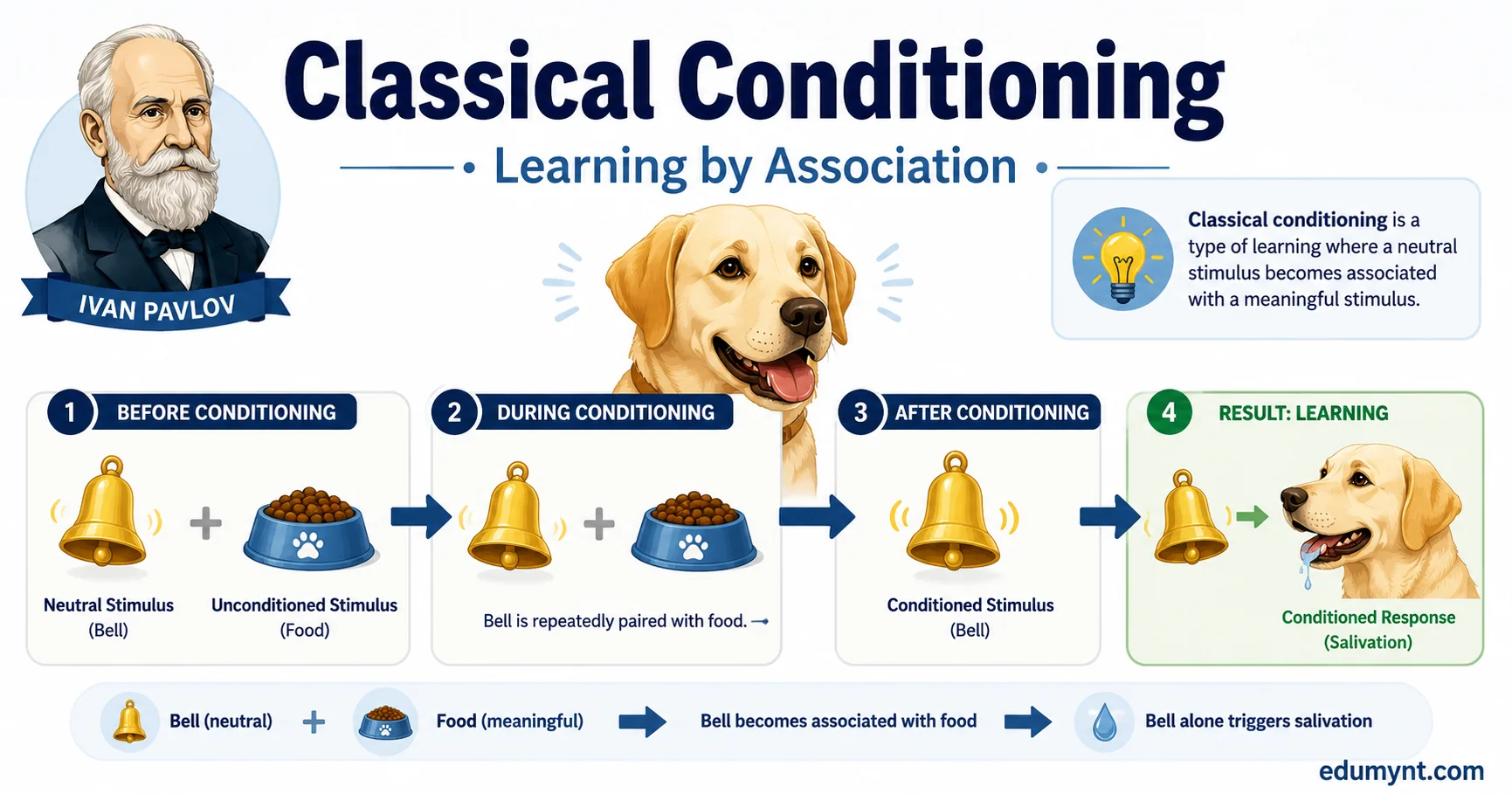
Simple भाषा में, classical conditioning तब होती है जब एक neutral stimulus किसी meaningful चीज़ से जुड़ जाता है और अपने आप एक learned response produce करने लगता है।
Classical conditioning एक ऐसी learning है जिसमें कोई person या animal दो stimuli को associate करके सीखता है।
Stimulus वो कुछ है जो response trigger कर सकता है — यह sound, smell, image, taste, place, person, या situation हो सकता है।
उदाहरण:
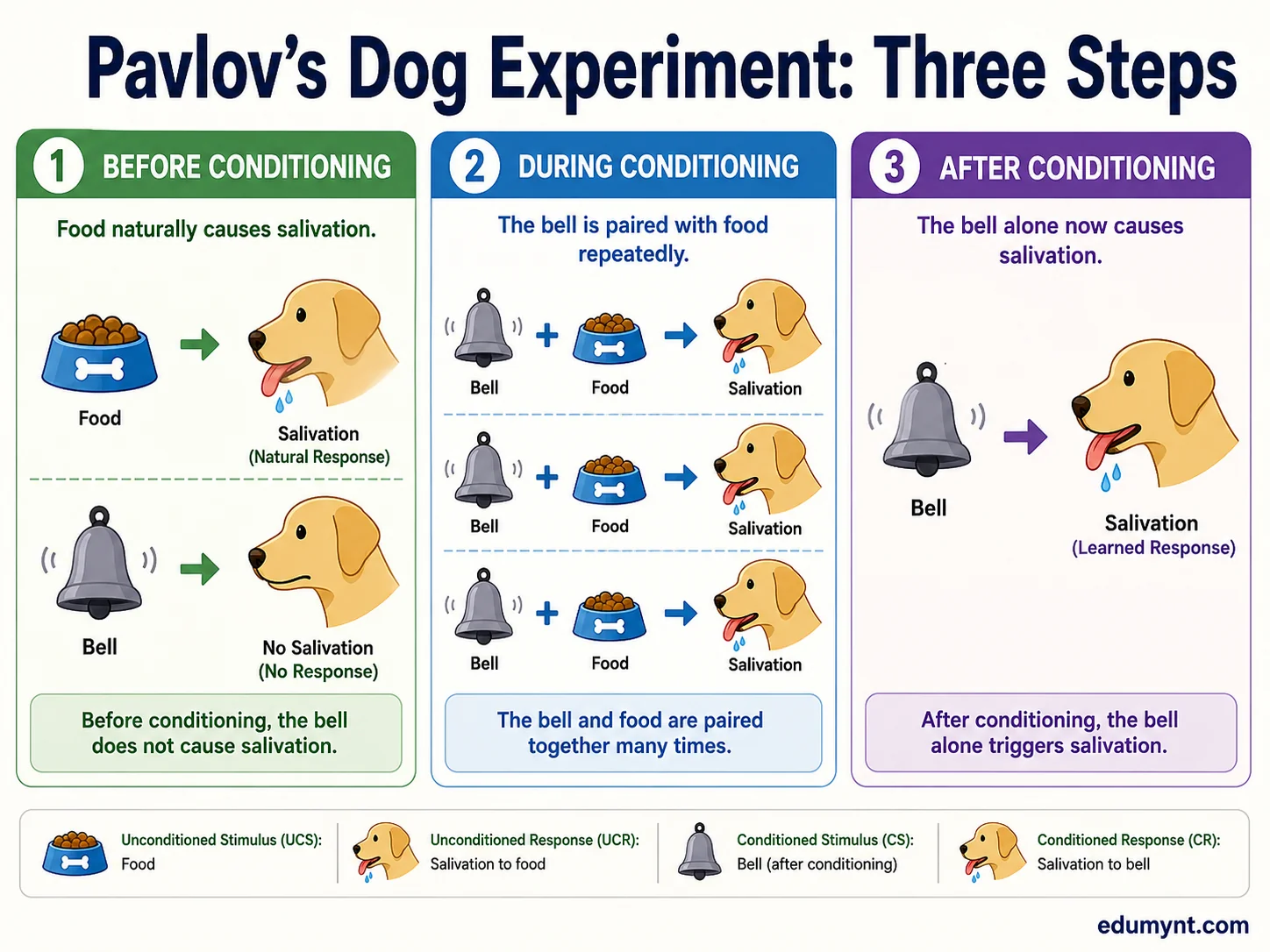
- Food naturally भूएे कुत्ते को salivation दिलाता है।
- Bell naturally कुत्ते को salivation नहीं दिलाती।
- लेकिन अगर bell को बार-बार food के साथ pair किया जाए, तो कुत्ता अंततः सिर्फ bell सुनकर salivation करने लग सकता है।
यही learned response classical conditioning है।
Classical conditioning association के through learning है, जहाँ एक पहले से neutral stimulus किसी दूसरे stimulus के साथ pair होने के बाद response produce करने लगता है।
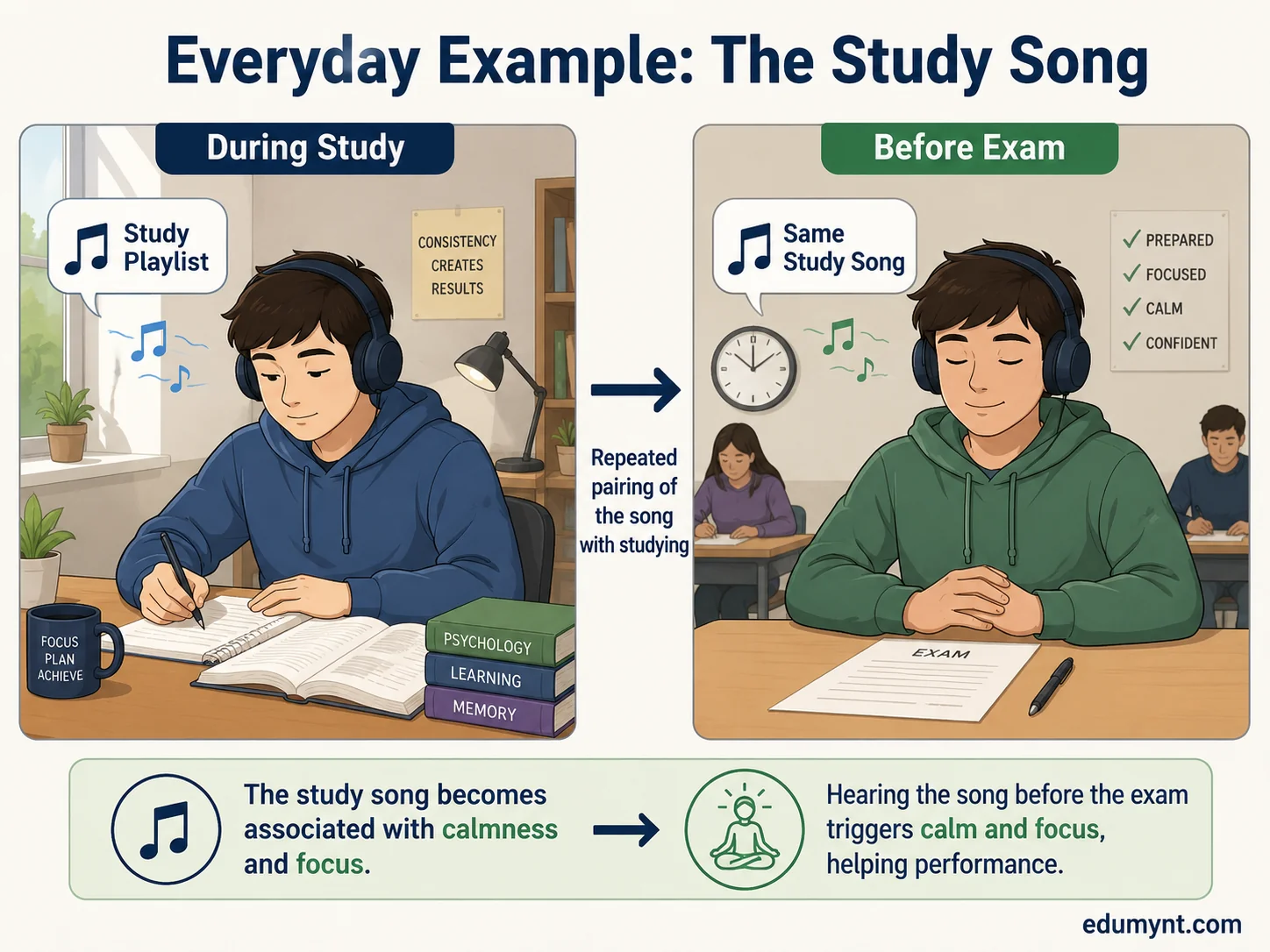
Imagine करें कि एक student पढ़ाई करते समय एक खास song सुनता है और relaxed feel करता है। समय के साथ, वह song focus और calmness से जुड़ जाता है। बाद में, जब student exam से पहले वही song सुनता है, तो वह और शांत feel कर सकता है।
Song ने naturally exam confidence नहीं बनाया। यह एक calm study routine से जुड़ गया।
Classical conditioning का सबसे famous example Ivan Pavlov से आता है, एक Russian physiologist।
Pavlov dogs में digestion study कर रहे थे। उन्होंने notice किया कि dogs सिर्फ तब salivate नहीं करते जब food उनके mouth में जाता है। वे तब भी salivate करने लगते थे जब वे lab assistants को देखते या ऐसी sounds सुनते जो food का signal देती थीं।
इस observation ने psychology के सबसे famous experiments में से एक को जन्म दिया।
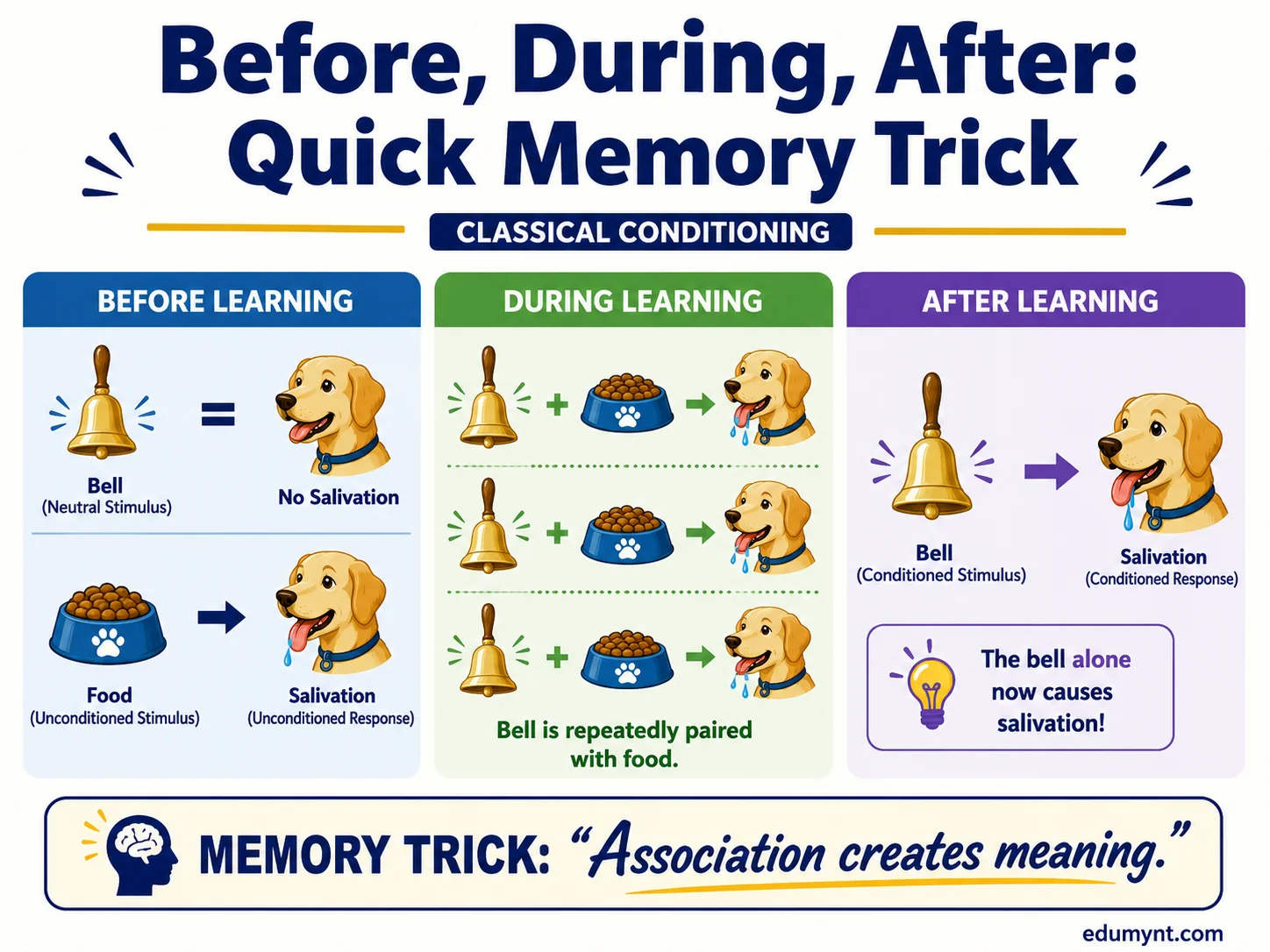
Learning होने से पहले:
- Food naturally salivation cause करता है।
- Bell या tone naturally salivation नहीं cause करती।
इस stage पर, bell neutral है।
Pavlov ने bell को बार-बार food के साथ pair किया।
Sequence ऐसा दिखता था:
Bell बजती है → Food आता है → Dog salivate करता है
कई pairings के बाल, dog ने bell को food के arrival से जोड़ना शुरू कर दिया।
अंततः, सिर्फ bell ने dog को salivation करा दिया।
Bell बजती है → Dog salivate करता है
Bell एक learned signal बन गई food के लिए।
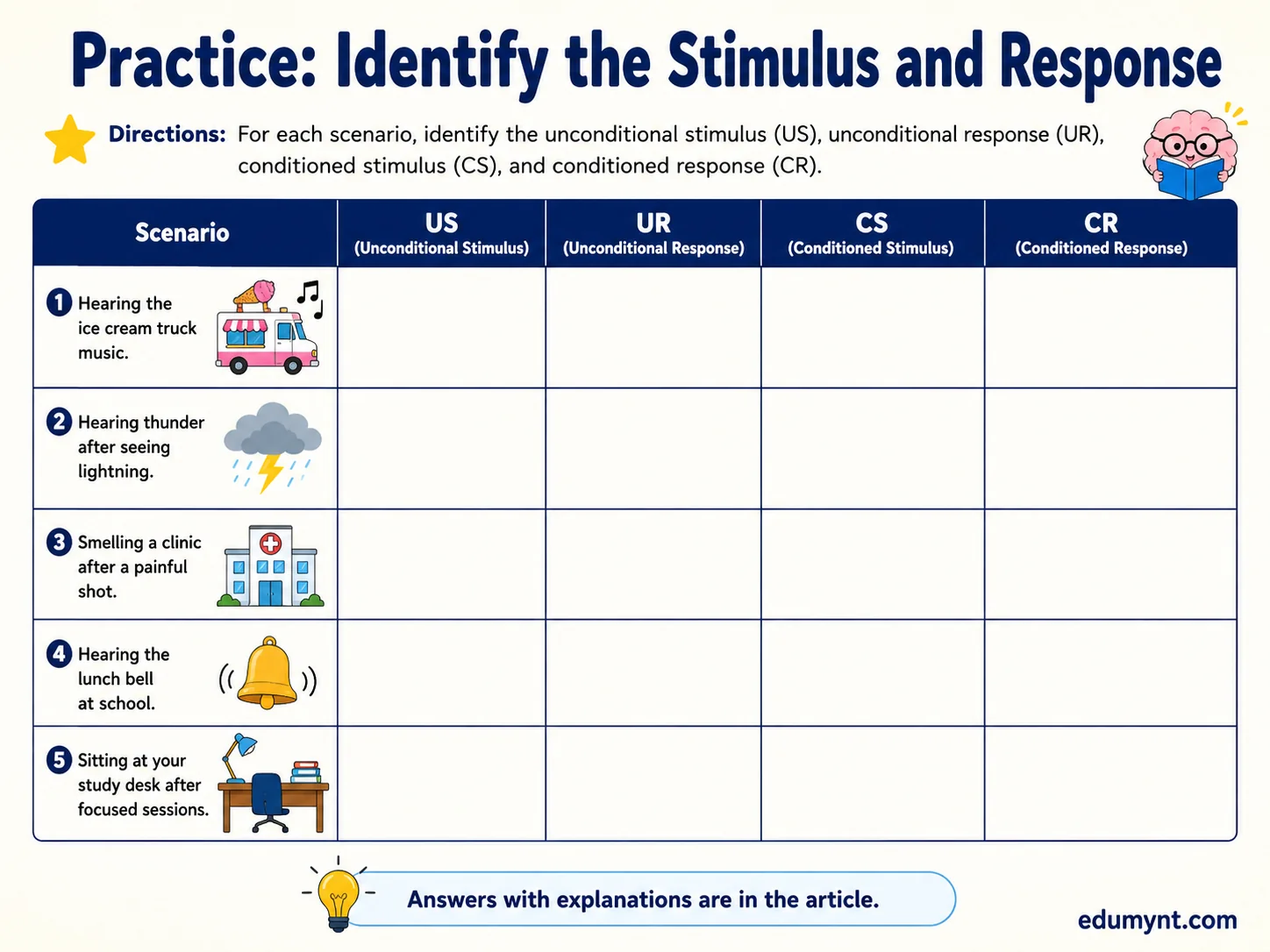
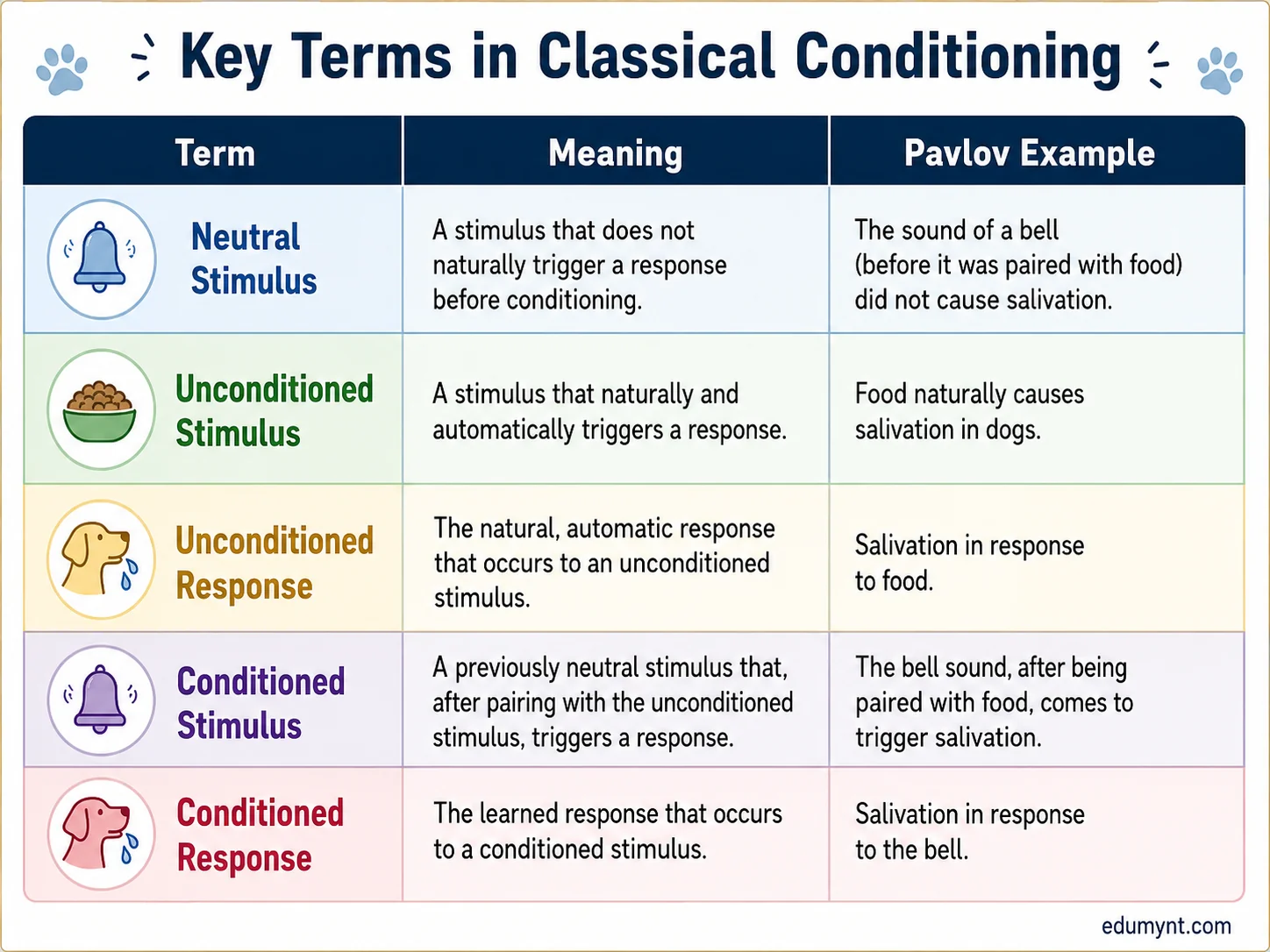
Classical conditioning को समझना बहुत आसान हो जाता है जब आप इसके पाँच main terms को समझ लें।
| Term | Meaning | Pavlov Example |
|---|---|---|
| Neutral Stimulus | एक stimulus जो naturally target response produce नहीं करता conditioning से पहले | Learning से पहले Bell |
| Unconditioned Stimulus | ए� stimulus जो naturally response produce करता है | Food |
| Unconditioned Response | एक natural, automatic response | Food के लिए Salivation |
| Conditioned Stimulus | एक पहले से neutral stimulus जो association के बाद learned response produce करता है | Learning के बाद Bell |
| Conditioned Response | Conditioned stimulus के लिए learned reaction | Bell के लिए Salivation |
Neutral stimulus वो है जो naturally target response cause नहीं करता।
Pavlov के experiment में, bell originally neutral थी क्योंकि यह naturally dog को salivate नहीं कराती थी।
Everyday example: एक dentist का waiting room एक child के लिए neutral हो सकता है जब तक उसने कोी uncomfortable dental experience नहीं की।
Unconditioned stimulus naturally learning के बिना response trigger करता है।
Pavlov के experiment में, food unconditioned stimulus था क्योंकि dogs naturally salivate करते हैं जब food दिया जाता है।
Everyday example: एक बहुत loud noise naturally किसी को startle करा देती है।
Unconditioned response unconditioned stimulus के प्रति natural, automatic reaction है।
Pavlov के experiment में, food के लिए salivating unconditioned response था।
Everyday example: अचानक loud sound सुनकर कूदना।
Conditioned stimulus एक पहले से neutral stimulus है जो unconditioned stimulus के साथ pair होने के बाद learned response produce करता है।
Pavlov के experiment में, bell conditioned stimulus बन गई।
Everyday example: एक hospital smell conditioned stimulus बन सकती है अगर यह pain, fear, या illness से जुड़ गई हो।
Conditioned response conditioned stimulus के प्रति learned reaction है।
Pavlov के experiment में, bell के लिए salivating conditioned response था।
Everyday example: Hospital जैसी disinfectant की smell से anxious feel करना क्योंकि यह पुरानी unpleasant medical experience याद दिलाती है।
Classical conditioning सिर्फ एक learning moment नहीं है। इसमें कई important processes शामिल होती हैं।
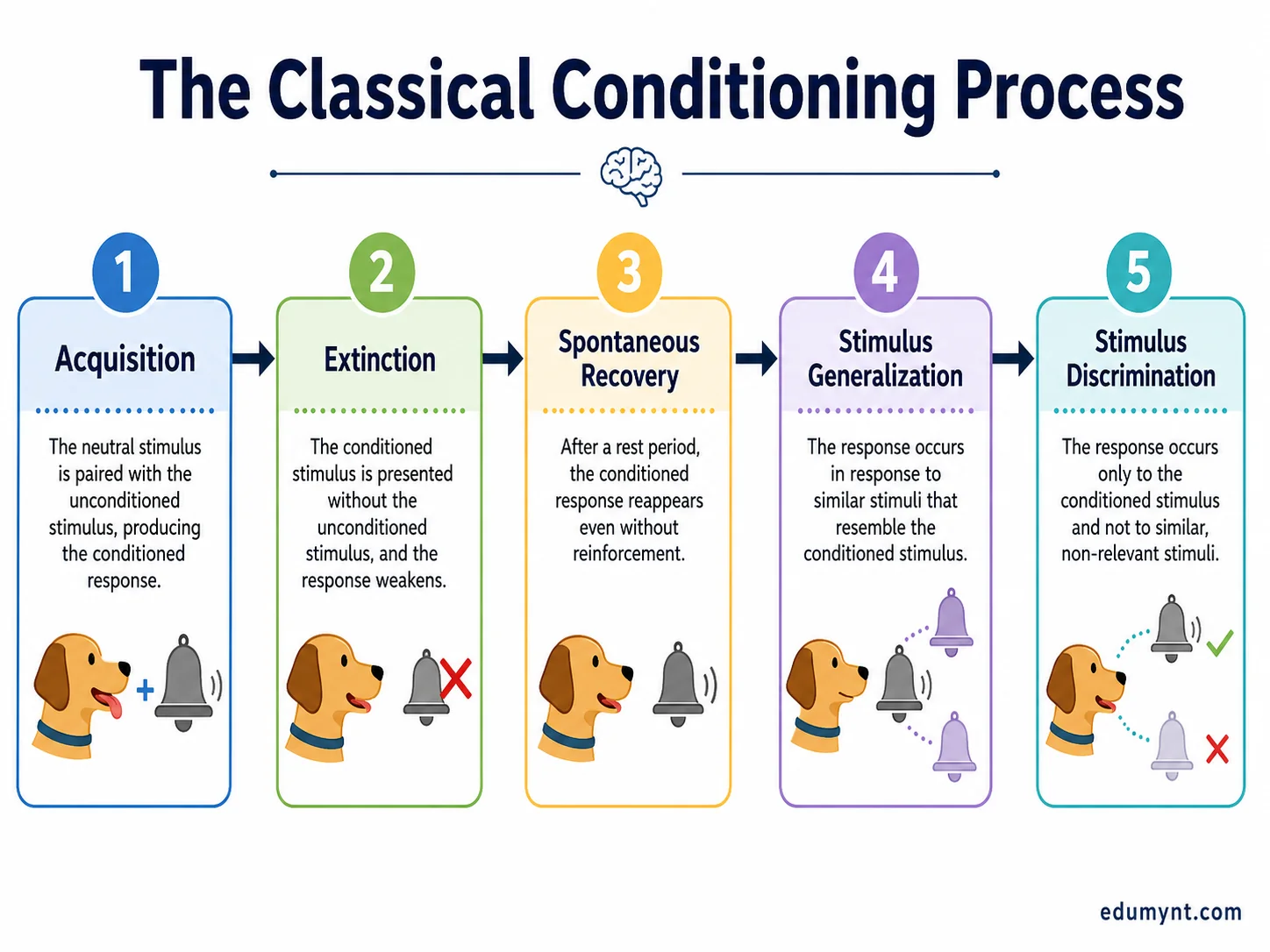
Acquisition learning का पहला stage है।
यह तब होता है जब neutral stimulus और unconditioned stimulus को कई बार साथ pair किया जाता है जब तक association बन नहीं जाता।
उदाहरण:
एक child हर बार एक fun movie देखते समय popcorn खाता है। समय के साथ, popcorn की smell child को excited feel करा सकती है शुरू होने से पहले।
Extinction तब होता है जब conditioned stimulus को बार-बार unconditioned stimulus के बिना present किया जाता है, जिससे conditioned response कमज़ोर हो जाता है।
उदाहरण:
अगर bell बहुत बार बजे लेकिन food कभी न आए, तो Pavlov का dog अंततः bell के लिए salivate करना बंद कर सकता है।
Spontaneous recovery एक पहले से कमज़ोर conditioned response का वापस आना है एक pause के बाद।
यह दिखाता है कि extinction हमेशा learning को पूरी तरह erase नहीं करता। बल्कि, learned association कमज़ोर या कम active हो सकता है।
Stimulus generalization तब होता है जब similar stimuli एक ही conditioned response produce करते हैं।
उदाहरण:
अगर एक child को एक बड़े सफ़ेद dog काट ले, तो वह बाद में अन्य सफ़ेद dogs, बड़े dogs, या dogs काम में डर सकता है।
Stimulus discrimination तब होता है जब कोई person या animal similar stimuli के प्रति अलग तरह respond करना सीखता है।
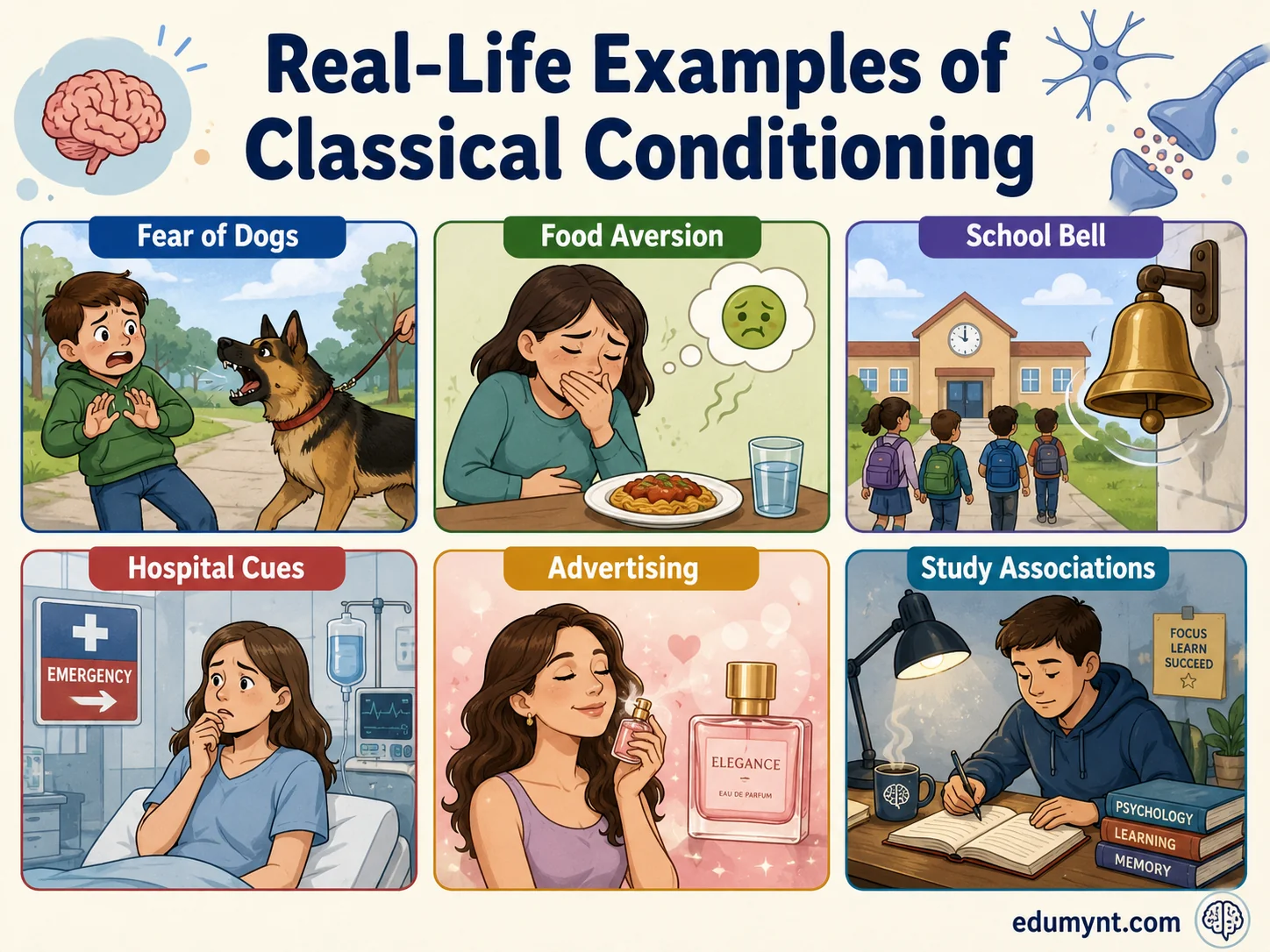
Classical conditioning सिर्फ laboratories तक सीमित नहीं है। यह everyday life में अक्सर दिखती है।
जिस person को dog काट ले, वह बाद में dogs को देखकर डर सकता है।
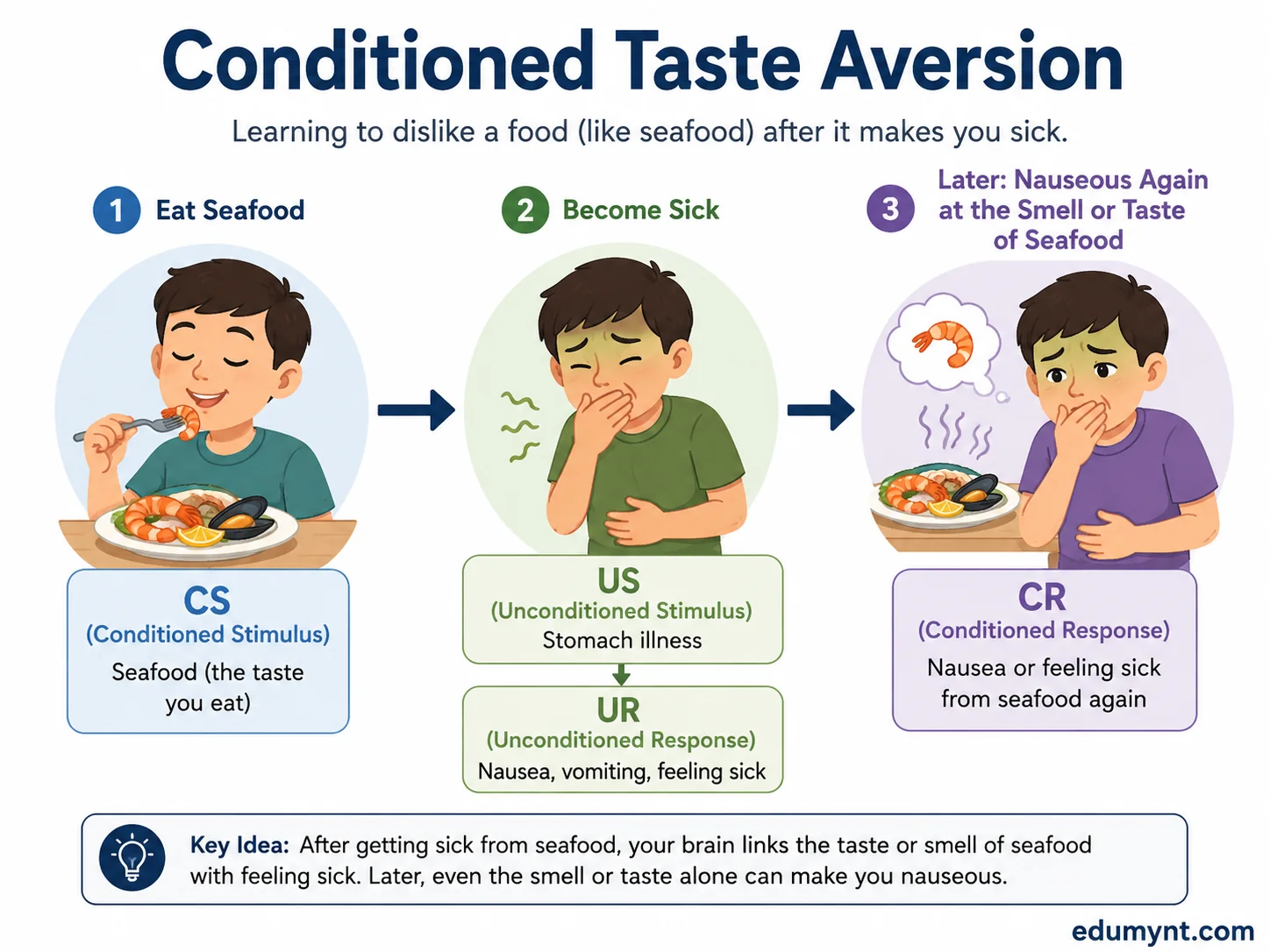
Food aversion classical conditioning का एक powerful example है।
मान लें किसी ने seafood खाया और बाद में बहुत बीमार हो गया। भले ही seafood ने actually illness cause नहीं की हो, वह person अगली बार seafood की smell या sight पर nauseous feel कर सकता है।
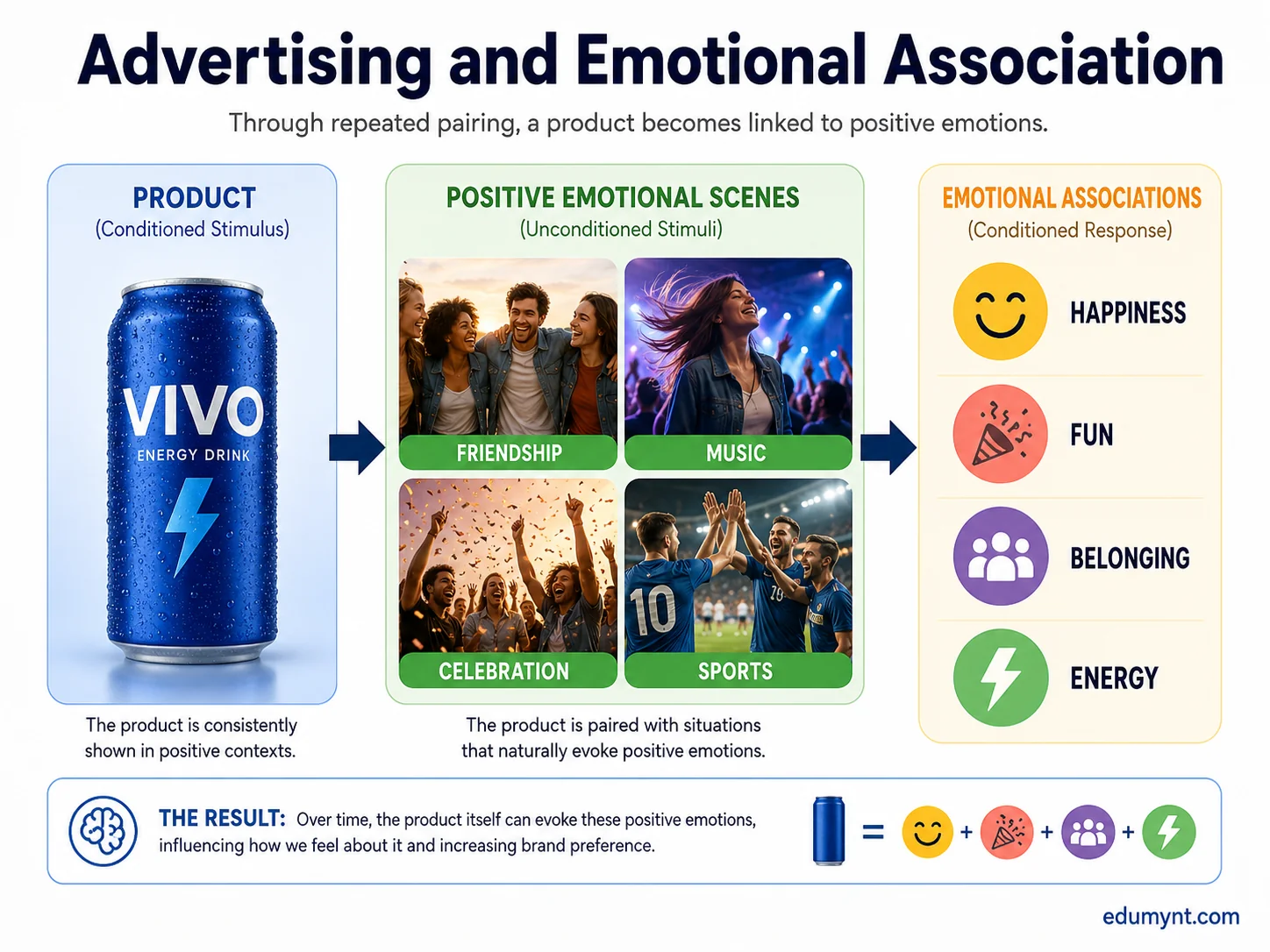
Advertisers अक्सर products को positive emotions के साथ pair करके classical conditioning का use करते हैं।
जिस person ने painful medical procedures से गुज़ारा है, वह बाद में hospital lights, disinfectant की smell, या medical equipment की sound सुनकर anxious feel कर सकता है।
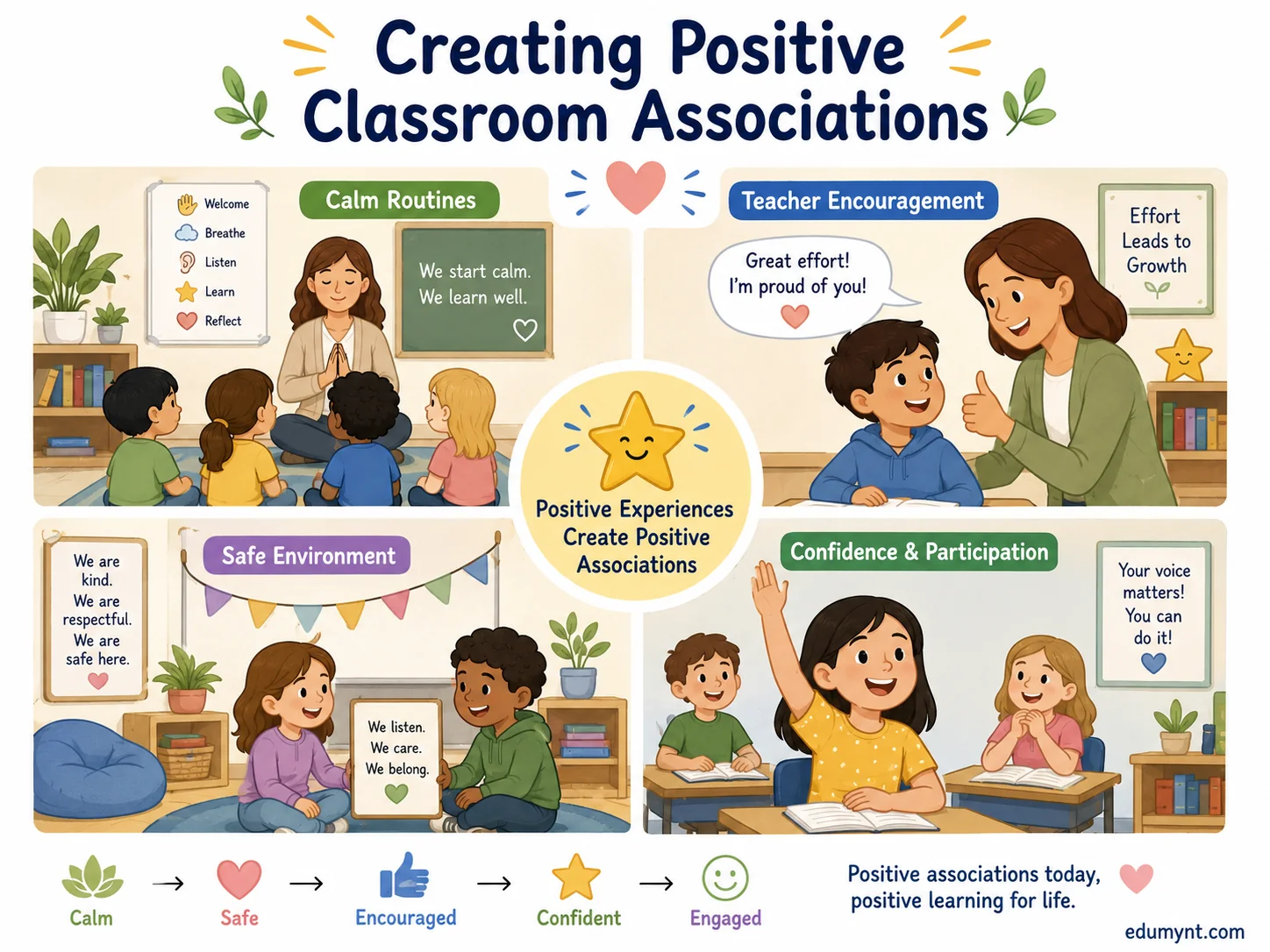
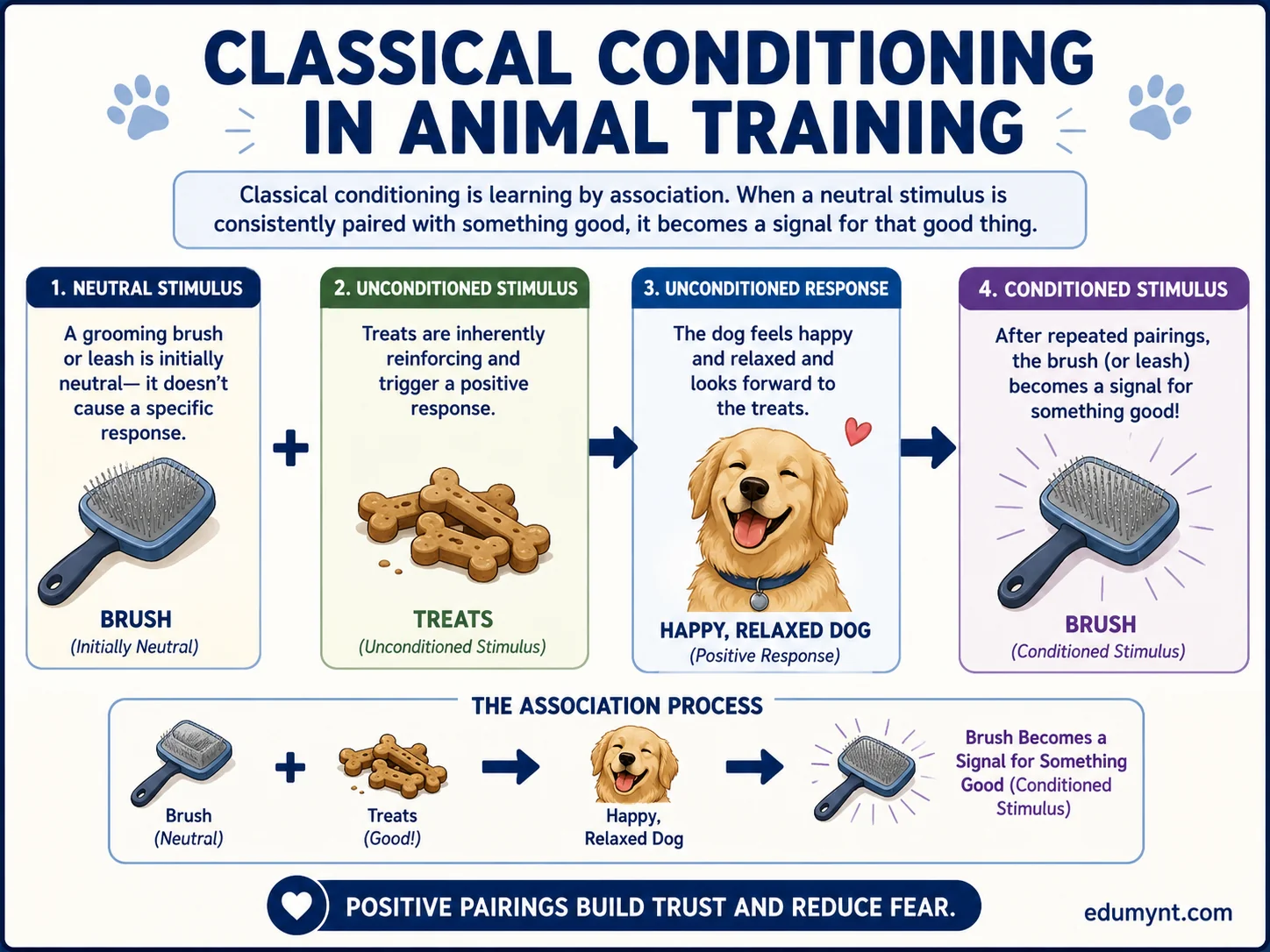
Classical conditioning positive learning environments को भी support कर सकती है।
दोनों learning के forms हैं, लेकिन अलग तरह से काम करती हैं।
Classical conditioning stimuli के बीच association के through learning है।
Operant conditioning consequences — rewards या punishments — के through learning है।
| Feature | Classical Conditioning | Operant Conditioning |
|---|---|---|
| Main idea | Association के through learning | Consequences के through learning |
| Focus | Response से पहले Stimuli | Behavior के बाद Consequences |
| Response type | अक्सर automatic या emotional | अक्सर voluntary behavior |
| Famous researcher | Ivan Pavlov | B. F. Skinner |
Teachers association के principles का use करके positive learning atmosphere बना सकते हैं।
Classical conditioning fears कैसे develop होते हैं यह explain करती है, लेकिन यह यह भी explain करती है कि fears कैसे कम हो सकते हैं।
Animal trainers classical conditioning का use करते हैं ताकि animals people, objects, या environments के पास safe feel करें।
Unconditioned stimulus naturally response cause करता है।
Conditioned stimulus सिर्फ learning के बाद response cause करता है।
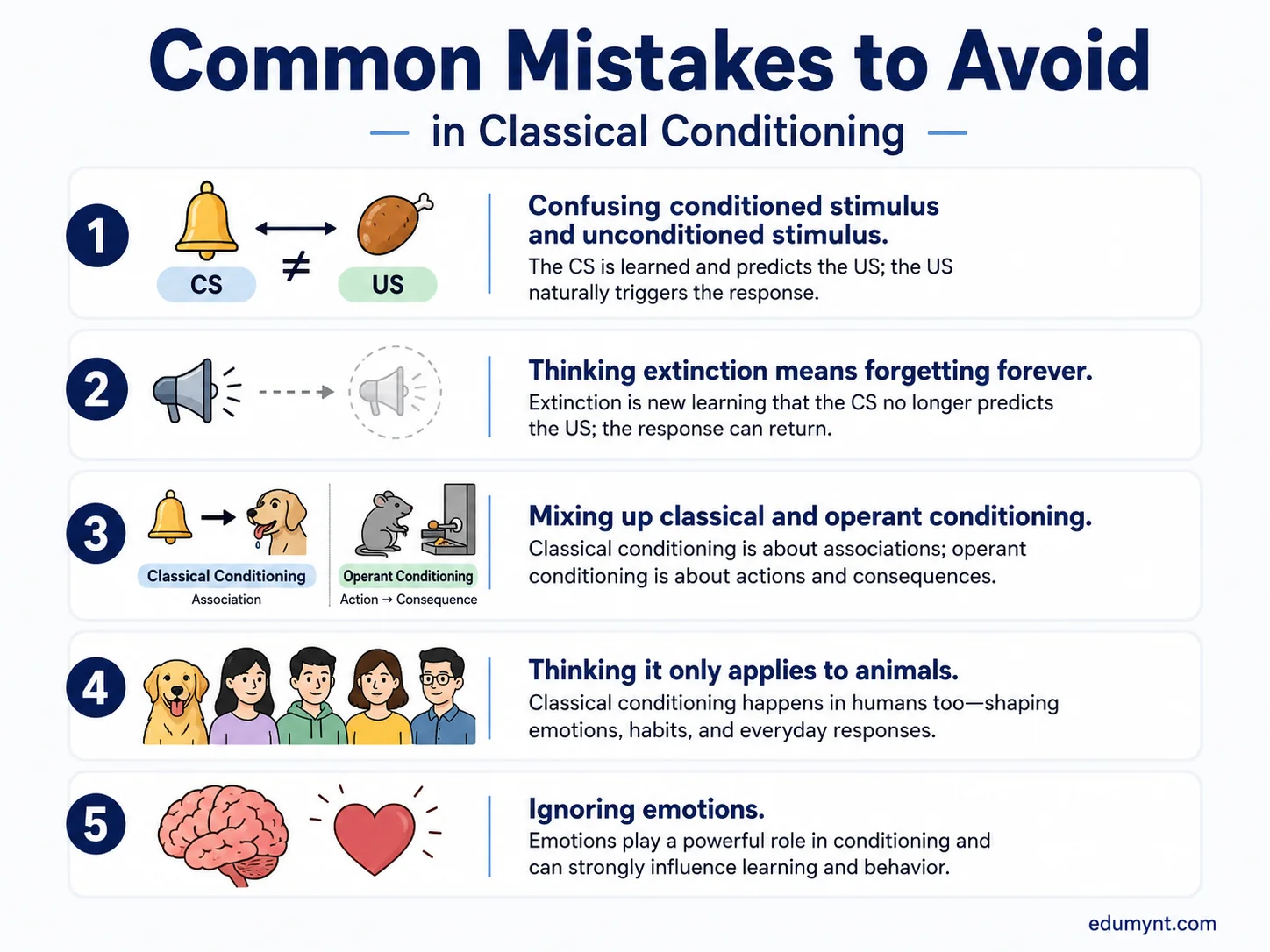
Extinction का मतलब है conditioned response कमज़ोर होना। इसका मतलब यह नहीं कि original learning पूरी तरह erase हो गई।
याद रखें:
- Classical conditioning stimuli के बीच association के बारे में है।
- Operant conditioning behavior के बाद consequences के बारे में है।
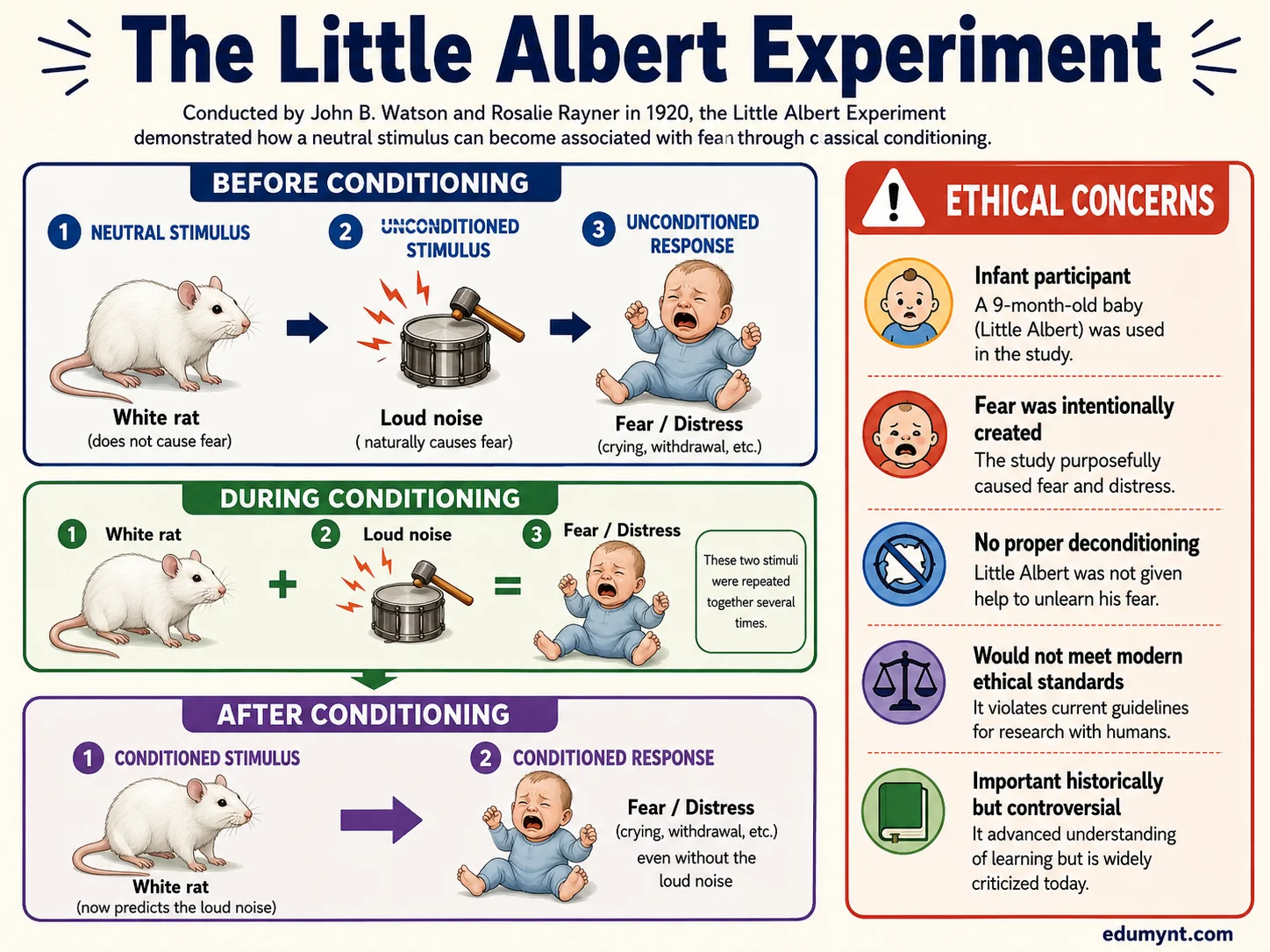
Classical conditioning psychology के सबसे foundational concepts में से एक है। यह explain करती है कि हम association के through कैसे सीखते हैं, fears कैसे develop होते हैं, preferences कैसे बनती हैं, और environments हमारी emotional responses को कैसे shape करते हैं।
Key ideas याद रखने के लिए:
- Neutral stimulus बन जाता है conditioned stimulus बार-बार unconditioned stimulus के साथ pair होने से।
- Conditioned response learned reaction है।
- Acquisition initial learning है; extinction response का कमज़ोर होना है।
- Spontaneous recovery दिखाता है कि extinction learning को erase नहीं करता।
- Generalization response को similar stimuli तक फैलाता है; discrimination similar में फर्क करने में मदद करता है।
- Classical conditioning humans और animals दोनों पर लागू होती है, laboratories और everyday life दोनों में।
Classical conditioning को समझना आपको human behavior, emotional reactions, और learning patterns को समझने का एक powerful lens देता है।